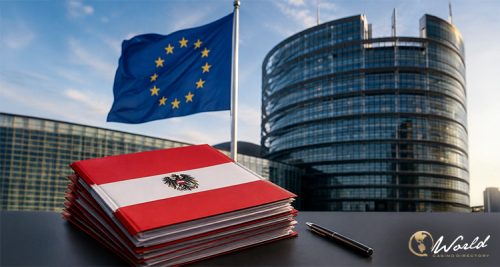
Austria has submitted its draft gambling legislation overhaul to the European Commission for review, starting a three-month standstill period that could reshape the country's market and influence EU-wide regulation.
Austria just took a big step toward reshaping its gambling market, and the move could have ripple effects far beyond its borders. The country has officially submitted its draft gambling legislation overhaul to the European Commission for review, a procedural milestone that signals serious intent. The Austrian Ministry of Finance confirmed the submission, which now sits within the European Union's Technical Regulation Information System, or TRIS for short. That might sound like bureaucratic jargon, but here's why it matters: it kicks off a mandatory three-month standstill period where the European Commission and other EU member states can dig into the proposal, raise concerns, or even push back.
### What the TRIS Process Actually Means
Think of TRIS as the EU's early-warning system for technical regulations. When a member state wants to introduce new rules that could affect the single market, it has to notify the Commission first. This isn't just a formality—it's a chance for other countries to flag potential problems before anything gets locked in. For Austria, this means the clock is now ticking. Over the next 90 days, the Commission and other member states will review the draft, and they can submit comments or formal objections if they think the rules would create unnecessary barriers or conflict with EU law.
### Why This Gambling Reform Matters
Austria's current gambling framework has been under scrutiny for years, both domestically and from Brussels. The existing setup, which heavily favors a single state-licensed operator, has faced criticism for being too restrictive and potentially out of step with EU competition principles. The new draft is expected to open up the market to more licensees, which could mean more options for players and more tax revenue for the state. But it's not just about economics—the reform also aims to tighten consumer protections and tackle illegal gambling more effectively. That's a balancing act many countries are struggling with right now.
### What Happens Next?
The standstill period isn't just a waiting game. During this time, Austria can't adopt the legislation, but it can engage in dialogue with the Commission to address any concerns. If no major objections come up, the process moves forward, and Austria can push the law through its own parliament. If objections do arise, things could get more complicated, potentially leading to negotiations or even legal proceedings. Either way, this is a clear signal that Austria is serious about modernizing its gambling sector, and the outcome could set a precedent for other EU countries watching closely.
### The Bigger Picture for European Gambling
This isn't happening in a vacuum. Across Europe, gambling regulations are shifting as governments try to balance innovation, consumer safety, and market fairness. Austria's move could influence how other member states approach their own reforms, especially those with similar monopoly-style systems. It's also worth noting that the European Commission has been increasingly active in scrutinizing gambling laws, so this review could have broader implications for how the sector is regulated across the entire EU. For now, all eyes are on Vienna and Brussels as the three-month clock starts ticking. The outcome could reshape not just Austria's market, but potentially the landscape for gambling operators and players across the continent.