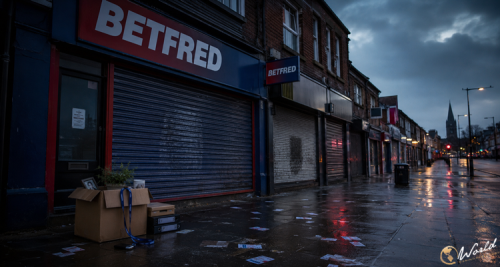
Betfred is closing 132 UK betting shops and cutting around 600 jobs as tax hikes and rising costs reshape the gambling industry. Here's what it means.
The UK betting industry just took another big hit. Betfred, one of the country's most recognizable bookmakers, has announced plans to shut down 132 of its high street betting shops. That's a move that could put roughly 600 people out of work, and it's a clear sign that the retail betting model is under serious pressure.
It's not just Betfred, either. The entire sector is feeling the squeeze from higher taxes, stricter regulations, and a massive shift toward online gambling. But when a company with Betfred's footprint decides to trim over 10% of its retail network, you have to sit up and take notice.
### Why Is Betfred Closing These Shops?
The short answer is money. The company says it's responding to rising operating costs and increased taxation on the gambling sector. And honestly, those two factors have been piling up for years.
The UK government has been tightening the screws on gambling operators, especially when it comes to fixed-odds betting terminals (FOBTs) and other high-stakes machines. Add in the general cost of running a physical store—rent, utilities, staff wages, business rates—and you start to see why the math just doesn't work anymore.
Betfred has confirmed that it's already begun a consultation process with the employees affected by the proposed closures. That's a polite way of saying the company is talking to staff about severance packages and what comes next. It's a tough situation for the people involved, no doubt about it.
### The Bigger Picture: A Sector in Transition
This isn't just about Betfred. It's about the entire way people gamble in the UK.
High street betting shops have been a staple of British towns for decades. Walk into any city center and you'll see them—often on the same street as a pub and a fried chicken shop. But those days are fading fast.
- Online casinos and mobile betting apps have made it easier than ever to place a wager from your couch.
- The pandemic accelerated that shift, as physical shops were forced to close for months.
- Younger generations simply don't have the same attachment to the high street betting experience.
So what you're seeing now is a natural, albeit painful, evolution. The companies that survive will be the ones that adapt, and for many, that means going digital-first.
### What Does This Mean for the Industry?
For the UK market, this is a wake-up call. The government's tax policies are clearly having an impact, and operators are making tough choices to stay profitable. But here's the thing: this isn't just a UK story.
The same pressures are being felt across the Atlantic. In the United States, the gambling landscape is changing rapidly too, with more states legalizing sports betting and online casinos. The retail model is shrinking everywhere, and operators are pouring their resources into digital platforms.
It's a classic case of adapt or die. And right now, Betfred is choosing to adapt.
### A Human Cost That Can't Be Ignored
Behind the numbers and the strategy, there are real people. Six hundred families are facing uncertainty. That's six hundred livelihoods that could be disrupted, and it's easy to forget that when we talk about market trends.
Betfred says it will work with affected employees during the consultation period, but the reality is that job losses are job losses. The company will likely try to redeploy some staff to other locations, but with 132 shops closing, there's only so much it can do.
### Looking Ahead
So what's next? For Betfred, this is probably just the beginning. If tax pressures continue and costs keep rising, more closures could follow. For the industry as a whole, the message is clear: the future is online.
If you're a betting operator, you need to be asking yourself some hard questions right now. Can you afford to keep your physical stores open? Are you investing enough in your digital offerings? Are you ready for the next wave of regulation?
The companies that answer those questions well will thrive. The ones that don't? Well, they might just be the next headline.
For the rest of us, this is a reminder that even the most established industries can change overnight. And when they do, the ripple effects are felt far beyond the boardroom.