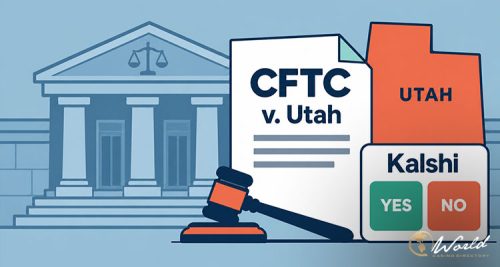
Federal Agencies Sue Utah Over Kalshi: What It Means for Prediction Markets
Dr. Annelies De Vos ·
Listen to this article~2 min
The CFTC and DOJ have sued Utah for restricting Kalshi, a prediction market. They argue state gambling laws interfere with federal oversight of derivatives. The case could set a precedent for how prediction markets are regulated across the U.S.
The Commodity Futures Trading Commission (CFTC) and the U.S. Department of Justice (DOJ) have sued Utah over its efforts to restrict prediction market operator Kalshi. They argue that the state's enforcement actions threaten federal regulatory authority over derivatives exchanges.
### The Lawsuit Explained
Filed in federal court on Monday, the 33-page complaint seeks to prevent Utah Attorney General Derek Brown from applying state gambling restrictions to exchanges registered with the CFTC. The agencies claim that Utah's actions cause "irreparable injury" to federal interests and undermine the CFTC's exclusive jurisdiction over such markets.
Prediction markets like Kalshi allow users to trade on the outcomes of future events, ranging from elections to economic indicators. The CFTC regulates these markets as derivatives, but Utah believes they constitute illegal gambling under state law.
### Why This Matters
This case isn't just about Utah; it's about the balance of power between federal and state regulators. If Utah succeeds, other states might follow suit, creating a patchwork of regulations that could stifle innovation in financial markets. The CFTC contends that a consistent federal framework is essential for market integrity and investor protection.
> "This lawsuit is about preserving the CFTC's ability to oversee derivatives markets without interference from state gambling laws," said a CFTC spokesperson.
### What's Next?
The lawsuit seeks an injunction to stop Utah's enforcement actions while the case proceeds. Legal experts suggest this could be a landmark case defining the boundaries of federal preemption in financial regulation.
For now, Kalshi can continue operating nationwide, but the outcome will shape the future of prediction markets in the U.S.