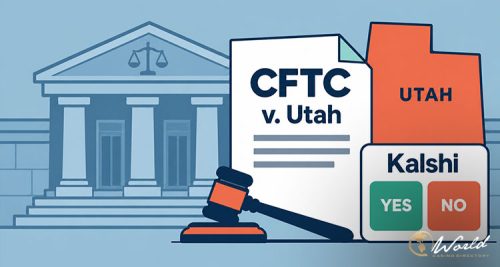
Federal Regulators Just Sued Utah Over Kalshi — Here's Why It Matters
Dr. Annelies De Vos ·
Listen to this article~3 min
The CFTC and DOJ have sued Utah over its restrictions on Kalshi, arguing state enforcement threatens federal authority over derivatives exchanges. Here's what it means.
The Commodity Futures Trading Commission (CFTC) and the U.S. Department of Justice (DOJ) have filed suit against Utah over the state's attempts to restrict prediction market operator Kalshi. Their argument? Utah's enforcement actions threaten federal authority over derivatives exchanges.
The 33-page complaint landed in federal court on Monday. It asks the court to stop Utah Attorney General Derek Brown from applying state gambling restrictions to exchanges that are already registered with the CFTC. The agencies say Utah's moves cause "irreparable injury" to federal interests.
### What's Actually at Stake Here
On the surface, this looks like a turf war between a state and two federal agencies. But dig a little deeper and it's really about who gets to decide how prediction markets operate in the United States.
Kalshi is a CFTC-regulated exchange. That means it falls under federal oversight, not state gambling laws — or at least, that's the position the feds are taking. Utah sees things differently, and its enforcement efforts are what triggered this lawsuit.
The core question: can a state apply its own gambling rules to a federally registered derivatives exchange? The CFTC and DOJ say no. They argue that letting Utah (or any state) do so would create a patchwork of regulations that undermines the entire federal framework.
### Why Prediction Markets Keep Landing in Court
Prediction markets let people trade on the outcome of future events — elections, economic indicators, sports, you name it. That's a big part of why regulators keep circling them.
- They look a lot like betting to some state officials
- They're regulated as derivatives at the federal level
- The overlap creates genuine legal friction
This isn't the first time Kalshi has found itself in a courtroom over state-level pushback. And it probably won't be the last.
### What Happens Next
The complaint seeks an injunction — essentially a court order telling Utah to back off while the case plays out. If the federal agencies win, it reinforces the idea that CFTC-registered exchanges operate under federal rules, full stop.
If Utah gets its way, though, other states could follow suit. That would open the door to a messy, state-by-state approach to prediction markets that the feds clearly want to avoid.
> "The agencies claim that Utah's actions cause irreparable injury to federal interests."
For anyone following the gambling and derivatives space — including professionals watching how Mexico's online casino market evolves alongside U.S. rules — this case is worth tracking. Regulatory boundaries are being redrawn in real time, and the outcome could shape how cross-border operators think about compliance.
We'll keep watching how this one unfolds.