Colombia's New 16% Online Gambling Tax Funds Flood Relief
Dr. Annelies De Vos ·
Listen to this article~4 min
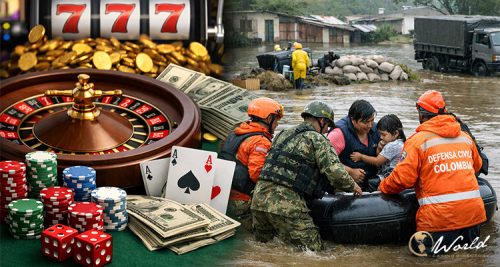
Colombia reinstates a 16% tax on online gambling wagers to generate $2.3 billion for flood relief in eight provinces, marking a major shift in using industry revenue for crisis funding.
Let's talk about a move that's making waves far beyond the casino lobby. The Colombian government just reinstated a tax on online gambling deposits. It's not your everyday policy shift—it's a direct response to a crisis. Severe flooding has hit eight provinces hard, and this is part of a broader emergency package to help those communities get back on their feet.
It feels like a classic case of finding funds where you can, doesn't it? When disaster strikes, governments have to get creative. This particular measure, known as Decree 0240, imposes a 16% consumption tax on wagers placed through digital platforms. And here's the key part: it applies to both domestic and international operators serving the local market. No one gets a pass.
### What Does This Tax Actually Mean?
So, what does a 16% consumption tax on wagers look like in practice? Think of it like a sales tax, but for your bet. If you deposit $100 to play, $16 of that goes straight to the tax. It's a significant chunk, and it's designed to add up fast. The goal is to funnel an additional $2.3 billion into the 2026 national budget, earmarked specifically for emergency funding. That's a lifeline for people who've lost homes, crops, and stability.
It raises some interesting questions for players and the industry. Will operators absorb some of the cost, or will it be passed directly to the consumer? How will this affect the competitive landscape of online casinos in Colombia? Only time will tell, but it's a major shift in the financial rules of the game.
### The Bigger Picture: Emergency Funding in Action
This isn't just about balancing the books. It's about targeted relief. The funds aren't disappearing into a general fund; they're tagged for the communities drowning in literal and financial hardship. The government is essentially saying, 'The revenue from this leisure activity can do some real, immediate good.'
Consider the scale of the need. Flooding across eight provinces disrupts everything:
- Agriculture and local food supplies
- Transportation and infrastructure
- Access to clean water and sanitation
- Basic shelter and safety for families
Funding that addresses these points isn't a luxury; it's a necessity. This tax mechanism creates a direct, if unconventional, pipeline from the digital casino floor to disaster recovery.
As one policy analyst noted, 'In times of crisis, traditional budgets often fall short. Innovative fiscal measures like this can bridge the gap between urgent need and available resources.' It's a pragmatic approach, turning a regulated vice into a public virtue.
### Looking Ahead for the Industry
For professionals watching the online gambling space, this is a significant precedent. It shows how quickly regulatory sands can shift in response to external events. A stable tax environment one day can become a key fiscal tool the next.
Operators now have to factor this new cost into their models. It may influence marketing strategies, bonus structures, and ultimately, where players choose to spend their money. The ones who communicate the 'why' behind the change transparently might just maintain player trust better than those who don't.
For players, it's a reminder that the digital gambling ecosystem doesn't exist in a vacuum. It's connected to the real-world economy and its crises. Your wager, in a small way, is now part of a larger recovery effort.
It's a fascinating, if complex, development. A government leveraging a growing industry to fund humanitarian aid. It makes you wonder—will other nations look at similar models when faced with their own emergencies? Only time will tell, but Colombia has certainly set a compelling, and compassionate, example.