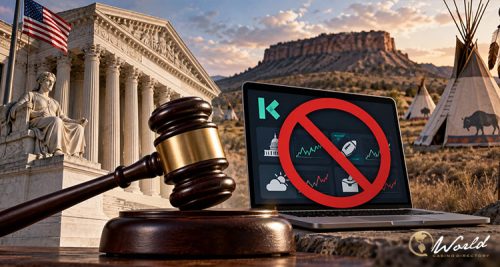
Court Ruling Shakes Up Kalshi's Tribal Sports Betting Plans
Dr. Annelies De Vos ·
Listen to this article~5 min
A federal appeals court just sided with two California tribes against Kalshi's sports contracts, reversing a key lower court decision and sending the case back for another look. Here's what it means.
You know that feeling when you think you've found a loophole, only to watch it slam shut? That's basically where Kalshi finds itself right now. A federal appeals court just handed two California tribes a major win in their fight against the prediction market's sports event contracts on tribal lands.
### What Exactly Happened?
The 9th U.S. Circuit Court of Appeals ruled unanimously that Blue Lake Rancheria and Chicken Ranch Rancheria of Me-Wuk Indians are likely to succeed on their claims that Kalshi's sports-related contracts violate tribal sovereignty. The three-judge panel reversed a key part of an earlier district court decision and sent the request for a preliminary injunction back for another look.
In plain English: the tribes argued that Kalshi's sports contracts step on their exclusive gaming rights, and the appeals court seems to agree. This isn't a final ruling, but it's a big deal.
### Why This Matters for the Bigger Picture
If you've been following the online betting world, you know Kalshi has been trying to carve out space as a federally regulated prediction market. They offer contracts on everything from elections to economic indicators. But sports? That's a whole different ballgame—literally.
Tribal casinos have long held a special place in the U.S. gaming landscape. Federal law recognizes their sovereignty over gaming on their lands, and they guard that fiercely. When Kalshi started offering sports event contracts, tribes saw it as a direct threat.
Here's the kicker: this case isn't just about Kalshi. It's about where the line gets drawn between innovative financial products and traditional gambling. And that line is getting blurrier by the day.
### The Legal Back-and-Forth
Let's break it down:
- **District court**: Initially sided with Kalshi, allowing the contracts to continue.
- **Tribes appealed**: Argued that the district court misread the law and ignored tribal sovereignty.
- **9th Circuit**: Found the tribes likely to succeed and remanded for further proceedings.
- **What's next**: The district court will reconsider the preliminary injunction request.
This doesn't mean Kalshi is dead in the water—far from it. But it does mean the legal battle is far from over.
### What This Means for You
If you're in the U.S. and interested in prediction markets or sports betting, this case could shape what's available to you down the road. It's a reminder that the rules aren't set in stone. What's legal today might not be tomorrow, and vice versa.
> "Tribal sovereignty isn't just a legal technicality—it's the foundation of a multi-billion dollar industry that supports entire communities."
That quote from a tribal gaming advocate sums up the stakes pretty well. This isn't just about contracts and courtrooms. It's about livelihoods, culture, and who gets to control gaming on native lands.
### The Road Ahead
For now, the 9th Circuit's decision sends a clear signal: tribes have a strong case. But Kalshi will likely keep fighting. The company has deep pockets and a vested interest in expanding its offerings.
What should you watch for next?
- The district court's decision on the preliminary injunction.
- Any further appeals or settlements.
- How other states and tribes react to this ruling.
One thing's for sure: the intersection of fintech, sports betting, and tribal sovereignty is going to stay messy for a while. And if you're a bettor or investor, you'll want to keep an eye on how this all shakes out.
### Final Thoughts
This ruling doesn't end the game—it just changes the playbook. Kalshi's sports contracts are on shaky ground for now, but the final outcome is still up in the air. For tribes, it's a validation of their legal standing. For Kalshi, it's a speed bump that could turn into a roadblock.
Either way, it's a story worth following. Because when courts start weighing in on what counts as gambling versus investing, the ripple effects touch everyone from Wall Street to Main Street—and beyond.