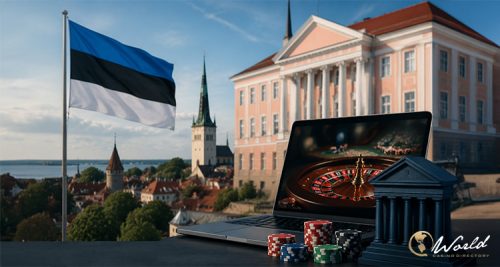
Estonia's cut to its online casino tax rate, aimed at boosting revenue, didn't deliver. The government is now reassessing the policy after the expected financial gains failed to materialize.
So, Estonia took a bit of a gamble with its online casino tax policy, and the results are in. They cut the rate, hoping for a big win in revenue, but things didn't play out as expected. Now, they're back at the table, reevaluating their strategy. It's a fascinating case study in how policy changes can have unintended consequences, and it's got implications far beyond their borders.
Here's the deal. The government lowered the tax rate on licensed online casinos from 6% to 4% over a two-year span. The thinking was pretty straightforward. Make the rate more competitive, attract more operators to set up shop in Estonia, and watch the tax revenue grow as a result. It's a classic 'cut to grow' economic play. But the numbers just didn't add up.
### What Went Wrong with the Tax Cut?
The anticipated surge in gambling tax revenue simply didn't materialize. Prime Minister Kristen Michal has now confirmed the government will revisit this policy as part of upcoming state budget and fiscal strategy talks. It's a clear signal that the initial bet didn't pay off. This leaves us with a big question: why didn't it work? Sometimes, a lower tax rate isn't enough of an incentive on its own. The broader regulatory environment, market size, and competition from neighboring regions all play a huge role. Operators make complex calculations before entering a new market, and a slight tax break might not tip the scales if other factors aren't equally attractive.
### The Ripple Effects for Policy Makers
This situation serves as a crucial lesson for other countries considering similar moves. It highlights the importance of holistic policy design. You can't just tweak one lever and expect everything else to fall into place. For jurisdictions in the US and elsewhere watching this unfold, it's a reminder to look at the whole picture. Market access, licensing procedures, and consumer protection frameworks are just as important, if not more so, than the headline tax rate.
Let's break down what other factors might have been at play:
- **Market Saturation:** The European online casino space is incredibly crowded.
- **Administrative Hurdles:** A favorable tax rate loses its shine if the licensing process is a bureaucratic nightmare.
- **Player Base:** The domestic market might be too small to support a significant new influx of operators.
It's a classic case of theory not quite matching reality. The government's hope was that a more competitive rate would be a magnet. In practice, it seems the magnet wasn't strong enough.
### What Happens Next for Estonia?
The upcoming budget discussions will be key. Will they revert to the old rate? Or will they try a different, more nuanced approach? Perhaps they'll look at tiered systems or incentives tied to job creation or technological investment. The path they choose will be closely watched by the global iGaming industry. It could signal a shift away from simple tax rate wars toward more sophisticated, value-driven regulatory models. For professionals analyzing market entry strategies, Estonia's next move will be a critical data point.
Ultimately, this isn't just a story about a tax rate. It's about the complex dance between regulation, market economics, and government revenue. Estonia's experience shows that predicting the outcome of a policy change is never a sure bet. It requires deep analysis, an understanding of the competitive landscape, and sometimes, a willingness to admit when a strategy needs a rethink. As other nations craft their own online gambling policies, they'd do well to study this case. The goal isn't just to attract operators—it's to build a sustainable, well-regulated market that benefits everyone, from the government treasury to the players themselves.