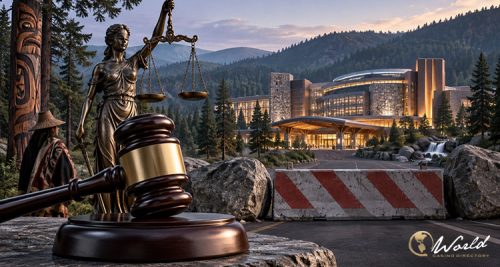
A federal judge denied the Scotts Valley Band of Pomo Indians' request for an injunction to reopen their Vallejo casino bid. Here's what it means for tribal gaming.
A federal judge just dealt a major blow to the Scotts Valley Band of Pomo Indians. Their dream of opening a casino in Vallejo, California, hit a legal wall last week when Judge Trevor N. McFadden denied their request for a preliminary injunction. That request, if granted, would have cleared the way for the tribe to pursue gaming on its Vallejo property while its lawsuit against the U.S. Department of the Interior plays out. But the judge wasn't convinced.
### Why the Judge Said No
Judge McFadden, who sits on the U.S. District Court for the District of Columbia, ruled that the tribe failed to meet the strict requirements for preliminary relief. In plain English, that means the tribe didn't show it would suffer immediate, irreparable harm without the injunction, or that it was likely to win the case on the merits.
So what does that mean for the casino? For now, the door stays shut. The judge's decision leaves in place a July determination from the Interior Department that essentially blocks gaming on the Vallejo land. That's a big deal because without Interior's approval, the tribe can't operate a casino under federal law.
### The Legal Battle Isn't Over
The tribe's lawsuit against the Interior Department is still moving forward. They're arguing that the agency wrongly rejected their application to take the Vallejo property into trust for gaming purposes. But without the injunction, the tribe can't start building or operating a casino while the case winds through court.
This isn't just about one tribe or one city. It's part of a much larger conversation about tribal sovereignty, land rights, and how casino gaming gets approved in the U.S. California has the largest Native American population in the country, and tribal casinos are a huge economic driver. When a tribe gets blocked, it sends ripples through the entire industry.
### What This Means for the Casino Industry
For casino operators and investors, this case is a reminder that tribal gaming is still a tangled web of federal regulations, court rulings, and political decisions. It's not as simple as buying land and opening a casino. The process can take years, even decades, and a single judge's ruling can change everything.
Here's what to watch next:
- The tribe could appeal the injunction denial, though that's an uphill battle.
- The main lawsuit will continue, and a final ruling could still go in their favor.
- Interior's July decision stands for now, meaning no gaming at Vallejo.
### The Bigger Picture
Tribal casinos generated over $40 billion in revenue in 2022, according to the National Indian Gaming Commission. That's a lot of money, and it's why these legal fights get so intense. Tribes see gaming as a path to economic self-sufficiency. States see it as a revenue source. And the federal government has to balance it all under the Indian Gaming Regulatory Act.
For now, the Scotts Valley Band of Pomo Indians will have to wait. Their fight is far from over, but the immediate path to a Vallejo casino is blocked. As one legal expert put it, "Preliminary injunctions are hard to get. This ruling doesn't end the case, but it definitely slows things down."
We'll keep watching this one. It's a story that could shape the future of tribal gaming in California and beyond.