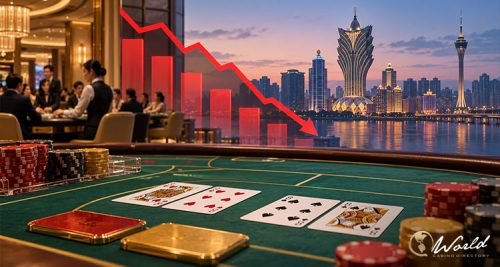
Macau's casino revenue fell in Q3 2026 as mass baccarat dropped 7.9% to $4.17 billion. Total GGR hit $7.46 billion, down 3.8% year-on-year. Here's what's driving the decline and what it means for the industry.
Macau's casino industry just posted its third-quarter numbers for 2026, and they're not pretty. Gross gaming revenue (GGR) slipped, and the main culprit is a weaker performance in mass-market baccarat. If you've been following the Asian gaming scene, you know Macau is the undisputed king of casino revenue. So when it sneezes, the whole industry catches a cold.
### The Numbers Behind the Drop
According to the Gaming Inspection and Coordination Bureau (DICJ), total casino GGR for July through September hit about MOP60.22 billion. That's roughly $7.46 billion in US dollars. Sounds like a lot, right? It is. But it's down 3.8% compared to the same period last year. And it's also 1.3% lower than the previous quarter. So the trend is pointing down, not up.
Mass baccarat, which includes premium mass play, generated MOP33.61 billion. In USD, that's about $4.17 billion. That segment alone dropped 7.9% year-on-year. That's a significant chunk of change, especially when you consider that mass baccarat is usually the steady, reliable earner for Macau's casinos.
### Why Mass Baccarat Matters So Much
Mass baccarat is the bread and butter of Macau's gaming floors. Unlike VIP baccarat, which depends on a small number of high rollers, mass baccarat brings in thousands of everyday players. It's more stable, more predictable, and less volatile. When mass baccarat stumbles, it's a sign that the broader consumer base might be tightening their belts.
So what's behind the decline? Several factors could be at play:
- **Economic headwinds**: China's economy has been slowing, and that affects consumer spending, even in Macau.
- **Travel patterns**: Post-pandemic travel habits have shifted, and competition from other Asian gaming destinations is heating up.
- **Regulatory changes**: Macau has been tightening its gaming regulations, which can impact revenue streams.
- **Seasonal fluctuations**: Q3 includes the summer months, which are usually strong, but this year might have seen fewer visitors than expected.
It's worth noting that the DICJ figures also show a dip from the previous quarter. That suggests the decline isn't just a blip—it's part of a broader pattern.
### What This Means for the Industry
A 7.9% drop in mass baccarat is a wake-up call for casino operators. They've been investing heavily in non-gaming amenities like hotels, restaurants, and entertainment to attract more mass-market visitors. But if those visitors aren't spending as much on the gaming floor, the returns might not justify the investment.
> "The mass market is the backbone of Macau's gaming industry. When it weakens, everyone feels it—from the big operators to the small businesses that depend on casino traffic."
That's a sentiment shared by many analysts. The decline in mass baccarat revenue could also pressure operators to rethink their strategies. Maybe more promotions, better loyalty programs, or even adjustments to table minimums.
### The Bigger Picture
Macau's casino revenue is closely watched as a barometer of consumer confidence in China. A decline here can signal that people are holding back on discretionary spending. And with the global economic outlook uncertain, that's a concern.
But it's not all doom and gloom. Macau still rakes in billions every quarter. The industry is resilient, and operators are used to riding out downturns. The key will be whether this trend continues into the fourth quarter, which is typically stronger thanks to holiday season traffic.
For now, all eyes are on the next set of numbers. If mass baccarat continues to slide, we might see more aggressive marketing tactics and perhaps even a shift in focus toward premium mass or VIP segments. But for the average player, it could mean better deals and more incentives to visit.
One thing's for sure: Macau's casino floors are still buzzing. The drop is significant, but it's not a crash. It's a correction—and the industry will adapt.