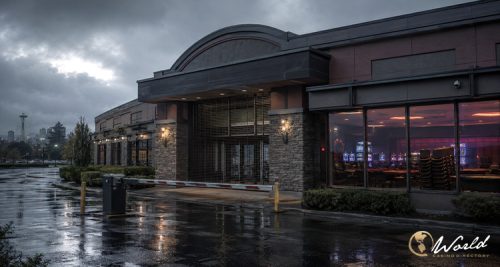
Maverick Gaming is closing two Tukwila casinos, impacting 238 jobs as part of its Chapter 11 restructuring. The Great American and Riverside venues will shut permanently.
Hey there. Let's talk about something that's hitting close to home for a lot of folks in the casino industry right now. The news just broke, and honestly, it’s a tough one to process. Maverick Gaming is shutting down two of its venues in Tukwila, Washington. That’s not just a couple of buildings closing—it’s 238 people who are about to lose their jobs.
It’s a stark reminder of how quickly things can change. One minute you're clocking in, the next you're getting a notice and trying to figure out what comes next.
### The Specifics of the Closures
The state WARN filings laid it out pretty clearly. We’re talking about two places that have been fixtures for a long time: the Great American Casino and the Riverside Casino. Both are sitting on Interurban Avenue South in Tukwila. They won’t be reopening.
Maverick Gaming, based in Kirkland, is in the middle of a major restructuring. They’ve been operating under Chapter 11 bankruptcy protection, which is basically a legal tool that gives a company some breathing room to try and get its finances in order while keeping creditors at bay. Closing these properties seems to be a key part of that plan.
Think of it like this: imagine trying to steer a big ship that’s taking on water. Sometimes, you have to seal off a couple of compartments to keep the whole thing afloat, even if it means losing parts of the ship you really care about. That’s essentially what’s happening here. It’s a strategic, albeit painful, retreat.
### The Human Impact Behind the Headlines
Let’s not gloss over the 238 number. That’s 238 individuals—dealers, floor staff, security, hospitality workers—who are facing uncertainty. The Worker Adjustment and Retraining Notification (WARN) Act is there to give employees a heads-up, typically 60 days, before a mass layoff or plant closure. It’s a cushion, but it’s not a solution.
These closures ripple out. It affects the local economy in Tukwila, from the suppliers who delivered goods to the restaurants nearby that benefited from the foot traffic. When a casino closes, it leaves a hole in the community that goes beyond just gaming.
- **Job Losses:** 238 positions are being eliminated.
- **Local Economy:** Reduced spending in the immediate area.
- **Industry Sentiment:** Raises questions about the stability of regional casino markets.
It’s a domino effect that starts with a corporate filing and ends at someone’s kitchen table, worrying about bills.
### What This Means for the Wider Gaming Landscape
So, what does a move like this tell us about the state of gaming in Washington and beyond? Maverick isn’t a small player. When a company of its size makes a cut this deep, it’s a signal. The pressures are real: from operational costs and competition to shifting regulations and consumer habits.
Operating under Chapter 11 is intense. It’s a period of scrutiny where every asset, every property, is evaluated purely on its ability to contribute to the company’s survival. For the Great American and Riverside locations, the math apparently didn’t add up anymore.
This isn’t happening in a vacuum. We’ve seen other regional operators tightening their belts, reevaluating their portfolios. It’s a moment of consolidation, where the focus shifts from growth to core stability. As one industry insider put it recently, "In times like these, you don't expand your empire—you fortify your castle."
### Looking Ahead: What Comes Next?
The immediate future for those 238 employees is the most pressing concern. The WARN notice triggers access to state resources for retraining and job placement, but the path isn’t easy. For Maverick Gaming, the closures are a step, but just one step, in a longer journey back to financial health. The company will be watching its remaining properties closely, likely with an even sharper eye on performance.
For the rest of the industry, it’s a case study. It highlights the importance of agility and the harsh reality that even established venues aren’t immune to market forces. It’s a wake-up call for operators everywhere to look at their own foundations.
In the end, news like this is more than a headline. It’s a story about business strategy, sure, but it’s fundamentally a human story about adaptation, survival, and the difficult choices companies have to make to stay in the game.