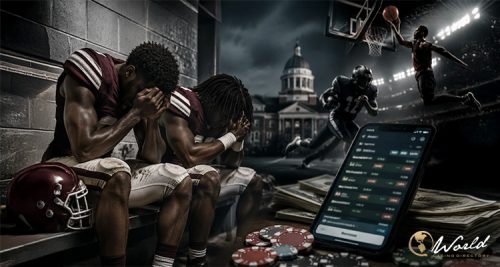
Two Mississippi State football players received NCAA sanctions for placing sports-related trades on Kalshi, including Super Bowl and NBA All-Star wagers. The Level III violations highlight the NCAA's strict stance on all forms of sports wagering.
Two Mississippi State football players are in hot water with the NCAA after placing sports-related trades on the prediction market platform Kalshi. According to documents obtained by the Clarion Ledger, the athletes received sanctions for wagers tied to the Super Bowl and NBA All-Star Weekend. These were classified as Level III violations, the lowest tier under the NCAA's enforcement structure, but they still carry consequences.
Here's the thing: the players' identities weren't disclosed in the documents. That's pretty standard in these cases, but it leaves fans guessing. What we do know is that the NCAA has strict rules prohibiting athletes, staff members, and conference employees from participating in any sports wagering activities—and that includes prediction markets like Kalshi.
### What Exactly Is Kalshi?
Kalshi is a regulated prediction market where users can trade on the outcomes of real-world events, from election results to sports games. Unlike traditional sportsbooks, it's structured more like a financial exchange. But the NCAA doesn't care about the technicalities—if it involves predicting sports outcomes, it's off-limits for athletes.
The players likely thought they were being clever by using a platform that isn't a typical betting site. But the rules are clear, and ignorance isn't a defense. The NCAA's stance is that any form of sports wagering can compromise the integrity of the game, and they're not budging on that.
### The Level III Violation Explained
So, what does a Level III violation actually mean? It's the NCAA's least severe classification, reserved for minor infractions that don't provide a competitive advantage. Think of it like a traffic ticket versus a felony. The penalties usually involve things like mandatory education sessions, community service, or a short suspension. In some cases, athletes might lose a game or two.
It's not career-ending, but it's a wake-up call. The NCAA has been cracking down on sports betting violations across the country, and this case is just another example. With sports betting now legal in over 30 states, the lines between legal and illegal gambling have gotten blurry for a lot of people—including college athletes.
### The Bigger Picture for College Sports
This incident highlights a growing issue in college athletics. Prediction markets are relatively new, and many people don't even realize they fall under the same umbrella as sports betting. But the NCAA has made it clear: if you're an athlete, you can't touch any of it. The consequences might be mild this time, but repeat offenses or higher-level violations could lead to much stiffer penalties, including loss of eligibility.
For Mississippi State, this is a bit of an embarrassment. The program now has to deal with the fallout and make sure its players understand the rules moving forward. It's a reminder that in the world of college sports, the rules are strict for a reason—and breaking them, even unintentionally, comes with a price.
### What This Means for Other Athletes
If you're a college athlete reading this, take note. The NCAA isn't playing around. Whether it's a traditional sportsbook or a prediction market like Kalshi, any wager on sports is a violation. The safest bet is to stay away entirely. And if you're unsure about whether something is allowed, ask your compliance office before you do it. A quick question can save you a lot of headaches down the road.
This case also serves as a warning for fans and bettors. Just because a platform is legal doesn't mean it's allowed for everyone. The rules vary by state, by school, and by league. Always do your homework.
### Final Thoughts
At the end of the day, these two players made a mistake, and now they're paying for it. The penalties might be minor, but the lesson is significant. The NCAA's rules on sports wagering are designed to protect the integrity of college athletics, and they're enforced without exception. As the landscape of sports betting continues to evolve, one thing is certain: athletes need to stay on the right side of the line.
So, what do you think? Should prediction markets be treated the same as traditional sports betting? It's a debate that's likely to continue as technology keeps changing the game. For now, though, the rule is the rule, and Mississippi State's players learned that the hard way.