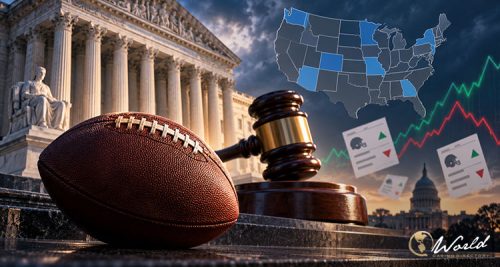
NFL's Supreme Court Move Could Change Prediction Markets Forever
Dr. Annelies De Vos ·
Listen to this article~3 min
The NFL asks the Supreme Court to let states regulate sports prediction markets, backing New Jersey against Kalshi. The ruling could reshape how event contracts are governed across the U.S.
The NFL just made a move that could reshape how sports prediction markets operate across the United States. In a legal brief filed with the U.S. Supreme Court, the league is backing New Jersey in its fight against Kalshi, a prediction market platform. At stake? Whether states can regulate sports-related prediction markets the same way they handle traditional sports betting.
### The Core of the Dispute
The case boils down to a simple but powerful question: does federal commodities law give the Commodity Futures Trading Commission (CFTC) exclusive authority over sports event contracts, or can states apply their own gambling laws to these products? The NFL argues that contracts tied to game outcomes are essentially sports betting in disguise and should be regulated as such.
This isn't just about one platform. It's about who gets to make the rules for a rapidly growing industry that sits at the intersection of finance and sports.
### Why the NFL Cares
For the NFL, this is about protecting the integrity of the game. The league has long opposed the expansion of sports betting, fearing it could lead to game manipulation and erode fan trust. By supporting New Jersey, the NFL is sending a clear message: prediction markets that hinge on football outcomes should not escape state oversight.
> "The NFL believes that states have a compelling interest in regulating sports-related prediction markets to safeguard the integrity of athletic competitions," the league stated in its brief.
### What This Means for the Industry
If the Supreme Court sides with New Jersey, states could gain the power to impose their own rules on prediction markets, potentially creating a patchwork of regulations across the country. That could be a headache for platforms like Kalshi, which currently operate under federal oversight.
On the other hand, if the CFTC's authority is upheld, prediction markets might continue to function more like financial exchanges, with less state interference. This could open the door for more innovation but also raise concerns about consumer protection and gambling addiction.
### The Broader Implications
This case isn't just about sports. It could set a precedent for how other event-based contracts are regulated, from politics to entertainment. The outcome will likely influence how states and federal agencies share power over emerging financial products.
For now, all eyes are on the Supreme Court. The decision could come as early as next year, and its impact will be felt far beyond the gridiron.
### What to Watch
- The Supreme Court's ruling on state vs. federal authority
- How states respond if they gain more regulatory power
- Whether prediction markets adapt their offerings to comply with new rules
- The NFL's next move in its ongoing battle against sports betting expansion
One thing's for sure: the game is far from over.