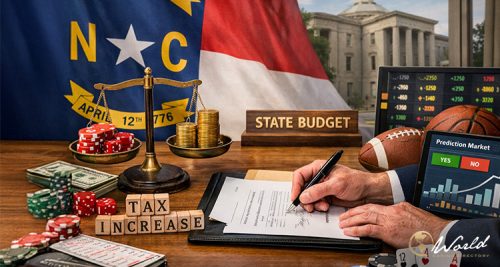
North Carolina raises sports betting tax from 18% to 23% and introduces a new tax on prediction markets. Governor Josh Stein signed the budget into law, impacting operators and bettors alike.
North Carolina just shook things up for sports betting operators and prediction market platforms. Governor Josh Stein signed the state's fiscal 2025-26 budget into law, and it brings some major changes. The new tax structure hits online sports betting harder and introduces a separate tax on prediction market activity, but keeps those platforms outside the state's licensing system. Let's break down what this means for the industry and bettors.
### The Tax Hike: From 18% to 23%
The budget bill, Senate Bill 257, raises the tax on online sports betting operators from 18% of gross wagering revenue to 23%. That's a 5% jump, and it's not small change. For operators, this means more money going to the state, which could impact how they run promotions or set odds. Think of it like this: if an operator makes $1 million in gross revenue, they'll now owe $230,000 instead of $180,000. That's $50,000 less for them to reinvest or pass on to customers.
### What About Prediction Markets?
Prediction markets, where people bet on outcomes like election results or weather events, are also getting their own tax. The law introduces a separate tax on these platforms, though it doesn't specify the exact rate yet. The big twist is that prediction market platforms won't be part of the state's licensing system. That means they operate under different rules, which could create a gray area. It's a bit like having two separate playbooks for two different games.
### Why This Matters for You
If you're a sports fan or someone who dabbles in online betting, this tax increase might feel distant. But it trickles down. Operators could tighten their bonuses, lower payout limits, or adjust odds to cover the extra cost. For example, those generous sign-up bonuses you see? They might shrink. On the flip side, the state gains more revenue for public projects, which is a win for taxpayers.
### The Bigger Picture
North Carolina isn't alone in this. Other states have raised taxes on sports betting as they realize how much money is flowing. This move shows that regulators are watching the industry closely. Prediction markets, in particular, are a new frontier, and states are still figuring out how to handle them. This law puts North Carolina ahead of the curve, but it also creates uncertainty for operators.
### What Operators Are Saying
Industry insiders have mixed feelings. Some say the 23% rate is manageable, especially since online sports betting has grown fast. Others worry it could push smaller operators out or discourage new ones from entering the market. One analyst compared it to a toll road: "The state just raised the toll, but the road is still the best route to take." It's a fair point, but it also means the journey gets pricier.
### Quick Takeaways
- Tax rate jumps from 18% to 23% on online sports betting revenue.
- Prediction markets face a new, separate tax but no licensing requirement.
- Operators may adjust promotions or odds to offset costs.
- State gains more revenue for public services.
### Looking Ahead
This law takes effect immediately, so operators need to adapt fast. For bettors, it's worth keeping an eye on how your favorite platform responds. Will they offer fewer free bets? Change their loyalty program? Time will tell. The key is to stay informed and bet smart. North Carolina just set a new standard, and other states might follow suit.
In the end, this is a shift in how the state views sports betting and prediction markets. It's not just about taxes; it's about regulation and revenue. Whether you're an operator or a casual bettor, these changes affect the game. So, keep your eyes open and your bets calculated.