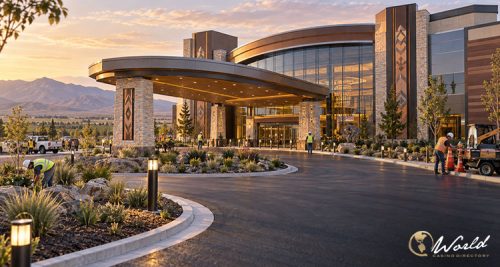
The $725 million North Fork Mono Casino & Resort in Madera County, California, is nearing completion, but a legal dispute with a neighboring tribe could delay its opening. Here's what you need to know.
The $725 million North Fork Mono Casino & Resort in Madera County, California, is inching closer to its grand opening. Gaming equipment is arriving, recruitment is in full swing, and the team is shifting into operational mode. But there's a catch: a legal dispute with a neighboring tribal gaming operator is still unresolved. The project's launch now depends on whether a federal court steps in.
The North Fork Rancheria of Mono Indians has pushed forward with construction despite losing previous court challenges over the approvals for its off-reservation gaming operations. So, what does this mean for the future of the casino? Let's break it down.
### The Legal Battle: A Quick Rundown
The dispute centers on the approval process for off-reservation gaming. The North Fork Rancheria of Mono Indians secured federal approval to build the casino on land they purchased in Madera County, but a neighboring tribe, the Picayune Rancheria of Chukchansi Indians, has challenged that decision in court. They argue that the process violated federal law and could set a precedent for other off-reservation casinos.
So far, the courts have sided with the Chukchansi tribe on some points, but the Mono Indians have continued to develop the project. The case is now before a federal appeals court, and a ruling could come at any time. If the court rules against the Mono Indians, the casino could be forced to shut down before it even opens.
### What's at Stake?
For the Mono Indians, this casino represents a major economic opportunity. The $725 million project is expected to create hundreds of jobs, generate millions in tax revenue, and provide a steady stream of income for the tribe. It's also a chance to diversify their economy beyond traditional tribal enterprises.
But for opponents, the casino raises concerns about traffic, environmental impact, and the precedent it sets for off-reservation gaming. They argue that casinos should be built on existing tribal lands, not on newly acquired land miles away from a tribe's ancestral home.
### The Bigger Picture: Off-Reservation Gaming
This isn't the first time off-reservation gaming has sparked legal battles. In California alone, several tribes have sought to build casinos on land far from their reservations, leading to fierce opposition from local communities and other tribes. The outcome of the North Fork Mono case could have ripple effects across the state and beyond.
If the court allows the casino to proceed, it could open the door for other tribes to pursue similar projects. If it blocks the casino, it could make it much harder for tribes to expand their gaming operations off-reservation.
### What's Next?
The casino is expected to open its doors in the coming months, but the legal dispute could delay or derail those plans. The tribe has said it will continue to fight for its right to operate the casino, and supporters are hopeful that the court will rule in their favor.
In the meantime, the tribe is moving ahead with hiring and training staff, and the casino floor is nearly ready. It's a waiting game now, with the future of the $725 million project hanging in the balance.
One thing is clear: the North Fork Mono Casino & Resort is a story worth watching. Whether it becomes a success story or a cautionary tale, it will shape the future of tribal gaming in California and beyond.