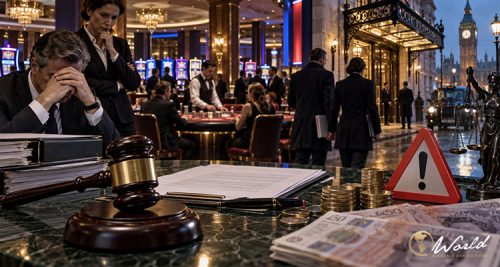
Three Rank Group-owned casino operators will pay over $6.3 million after UK regulators found serious anti-money laundering and safer-gambling failures across 51 casinos. The settlement also requires an independent audit.
### A Costly Wake-Up Call for Casino Compliance
Three casino operators owned by Rank Group have agreed to pay a settlement of more than £5 million — that's roughly $6.3 million — after the UK Gambling Commission (UKGC) found serious failures in anti-money laundering (AML) and safer-gambling practices. The settlement involves Grosvenor Casinos Limited, Grosvenor Casinos (GC) Limited, and Gaming Group Limited, which together run 51 casinos across Great Britain. As part of the agreement, the companies must also undergo an independent third-party audit of their AML and social responsibility controls. The regulatory action came after a licence review and compliance assessment covering issues identified between November 1, 2022, and September 30, 2023.
### Why This Matters for the Global Casino Industry
Now, you might be wondering why a UK settlement should concern anyone outside Britain. Here's the thing: gambling regulators around the world watch each other closely. When the UKGC — one of the most respected authorities in the business — takes action, it sends ripples across the industry. Operators in the United States, especially those in states with expanding casino markets like Nevada, New Jersey, and Pennsylvania, should take note. The message is clear: if your AML and responsible gambling programs aren't up to scratch, you could be next.
### What Exactly Went Wrong?
The UKGC didn't just find minor paperwork issues. The failures were significant enough to trigger a licence review. While the full details are still emerging, the commission typically flags problems like:
- **Inadequate customer due diligence** – not properly verifying who your high-rollers really are.
- **Failure to monitor transactions** – missing red flags for money laundering.
- **Weak safer-gambling checks** – not stepping in when a customer shows signs of harm.
These aren't just regulatory boxes to tick. They're the foundation of a trustworthy gambling industry. When they slip, everyone loses — players, operators, and the communities that host casinos.
### The $6.3 Million Question: Is This Enough?
Some industry watchers argue that a £5 million ($6.3 million) settlement is just the cost of doing business for a company of Rank's size. After all, Rank Group operates dozens of casinos and generates hundreds of millions in revenue. But the real penalty might be the reputational hit and the mandatory audit. A third-party audit isn't cheap, and it forces the company to open its books to outside scrutiny. That kind of transparency can be uncomfortable — but it's necessary.
As one compliance expert put it: "Regulators aren't just looking for fines. They want to see a culture change. If you don't fix the root cause, you'll be back in front of the commission before you know it."
### What This Means for Casino Players
If you're a player, this might all sound like inside baseball. But it actually affects you directly. Stronger AML controls mean your money is safer from criminal elements. Better safer-gambling measures mean you're less likely to fall into harmful patterns. In short, when regulators do their job, you get a fairer, safer experience.
So the next time you sit down at a table — whether in London or Las Vegas — remember that behind the scenes, there's a whole system working to keep the game clean. Sometimes it takes a multi-million-dollar settlement to remind everyone of that.
### The Takeaway
Rank Group's settlement is a cautionary tale for casino operators everywhere. Compliance isn't optional, and cutting corners can cost you far more than a fine. For players, it's a reminder that the industry is being watched — and that's a good thing.