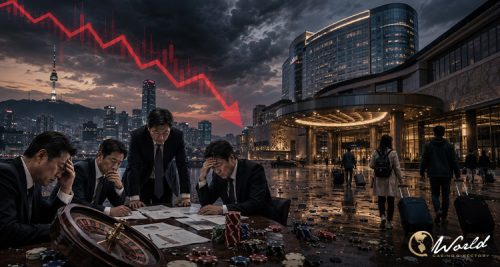
South Korea's Casino Levy Hike Could Backfire on Industry Recovery
Dr. Annelies De Vos ·
Listen to this article~4 min
South Korea's casino industry warns that proposed levy hikes and license changes could hurt recovery. The Korea Casino Association urges the government to reconsider.
The Korea Casino Association has formally asked the South Korean government to drop proposed regulatory changes that would raise the maximum tourism fund contribution for foreigner-only casinos and introduce five-year license renewals. The group warns these measures could pile more financial pressure on operators still trying to recover from the COVID-19 pandemic.
The Ministry of Culture, Sports and Tourism is considering increasing the maximum contribution to the Tourism Promotion and Development Fund from 10% to 15%. The proposal also includes a five-year license renewal system and prior approval for key business changes.
### Why This Matters for the Industry
South Korea's foreigner-only casinos have been hit hard by the pandemic. Many operators are still struggling to get back on their feet. A higher levy could mean less money for reinvestment, marketing, and operations. That's a big deal when you're trying to attract international visitors who have plenty of other options.
Think of it this way: if you're running a casino in Seoul and your costs go up by 5%, you've got to make that up somewhere. Either you cut corners on service, raise prices, or watch your profits shrink. None of those are good for business.
### The Proposed Changes at a Glance
- **Higher fund contribution**: From 10% to 15% of certain revenues
- **License renewals**: Every five years instead of the current system
- **Prior approval**: For major operational changes
The Korea Casino Association argues these changes are premature. The industry hasn't fully recovered from COVID-19, and adding new costs could stall the rebound.
### What Operators Are Saying
"We understand the government's need to fund tourism development," said a spokesperson for the association. "But this is the wrong time to increase the burden on operators. Many of us are still in survival mode."
Operators point out that foreigner-only casinos are a key part of South Korea's tourism strategy. They bring in visitors who spend money on hotels, restaurants, and attractions. Hurting the casinos could ripple through the entire tourism economy.
### The Bigger Picture
South Korea's gambling market is unique. Citizens can't gamble in most casinos, but foreigners can. That means the industry depends heavily on international travelers. With travel still recovering, especially from China and Japan, operators need flexibility, not higher costs.
The government's goal is to boost tourism promotion funds. But if the levy drives operators out of business or discourages investment, the strategy could backfire. Less revenue from casinos means less money for tourism promotion anyway.
### What Happens Next
The Ministry of Culture, Sports and Tourism is reviewing the proposal. The Korea Casino Association has asked for more time to study the impact and suggest alternatives. Industry insiders expect a decision within the next few months.
For now, operators are watching closely. If the changes go through, some may rethink their investments in South Korea. Others might shift focus to other markets like Macau or Singapore.
### Key Takeaways for Professionals
- The proposed levy increase is from 10% to 15% of certain revenues
- License renewals would happen every five years
- The industry argues it's too soon after COVID-19
- Foreigner-only casinos are critical for tourism
- A decision is expected in the coming months
This is a developing story. We'll keep you updated as new information comes in.